The Rise of AI Pet Robots: Options for UK Kids 2026
AI robotic pets are becoming genuinely compelling companions. Our guide to AI pet robots for UK children in 2026: Eilik, Vector and other researched options.
As an Amazon Associate, AIToys.co.uk earns from qualifying purchases. Featured buy links exclude ASINs last recorded as currently unavailable on Amazon UK (5 August 2026 availability report: a snapshot, not a live Creators API check). Prices move, so always check before you buy.
There's something uniquely compelling about a robot that feels like it knows you. Not in the uncanny valley way of a humanoid robot straining for realistic expression, but in the way a well-designed AI pet robot reacts to your presence, responds to your voice, and expresses what genuinely looks like delight when you come into the room.
AI pet robots and companion robots have existed in various forms for years (Sony's AIBO being the iconic early example) but the category has matured significantly. Today's AI pet robots are genuinely sophisticated, increasingly affordable, and raising real questions about the role of artificial companions in children's lives.
What Are AI Pet Robots?
AI pet robots are physical robotic devices designed to simulate aspects of a living companion (an animal or a character) through responsive, adaptive behaviour. Unlike traditional electronic pets (Tamagotchi, Furby), modern AI pet robots combine:
- Physical mobility: they move around, react physically, display body language
- Facial/expression display: typically through LED screens or expressive mechanical faces
- Voice interaction: microphones and speakers for conversation
- Environmental sensing: cameras, proximity sensors, and touch sensors to respond to the physical world
- Emotional modelling: software that generates context-appropriate emotional responses
The result is a toy that, at its best, creates a genuine sense of relationship: something that feels different from other toys because it seems to respond uniquely to you and your household.
How the AI Works
Modern AI pet robots use several layered technologies:
Sensor fusion: Multiple sensors (cameras, microphones, IR, touch) provide a continuous stream of information about the robot's environment. On-device processors combine these signals to understand context: is the child nearby? Are they speaking? Are they touching the robot?
Facial and voice recognition: Higher-end robots include the ability to recognise specific people and learn their voices. This allows the robot to respond differently to different family members: a feature that genuinely contributes to the feeling of relationship.
Natural language processing (NLP): Conversational AI pet robots can parse and respond to natural speech, holding simple-to-moderate conversations. The sophistication varies significantly between products, and the newest models connect to large language models such as ChatGPT for far richer replies.
Emotional response modelling: This is the most distinctive element of companion robots. Software models an emotional state (curiosity, happiness, tiredness, affection) and expresses it through movement, sound, and facial expression. Higher-end robots update this model continuously based on input.
Machine learning adaptation: Some robots learn individual preferences over time, adjusting their behaviour based on which interactions generate positive responses from their specific owner.
The Emotional Benefits for Children
The emotional dimension of AI pet robots is both their most compelling feature and the aspect that most warrants careful thought.
A patient, consistent companion: Unlike human interaction, an AI companion is never tired, irritable, or distracted. For children who find the unpredictability of social interaction challenging, this consistency is genuinely valuable.
Low-stakes social practice: Interacting with a robot (talking to it, caring for it, telling it about your day) provides social-emotional practice in a non-judgmental environment. This is particularly documented for children with social anxiety or autism.
Engagement and motivation: The interactive, responsive nature of AI pets creates sustained engagement that passive toys rarely achieve. Children who quickly tire of standard toys often maintain interest in AI companions for months.
What research suggests: There is genuine emerging research on the benefits of robot companions for children with autism, ADHD, and social anxiety. Studies have shown that interacting with social robots can build communication skills and reduce anxiety in clinical settings. Consumer-grade AI pets aren't clinical tools, but they operate on similar principles.
The Best AI Pet Robots for UK Kids in 2026
The robot pet market moves fast, and stock comes and goes. Some of the best-known names (Loona, the Miko 3, Sony's premium models) are frequently sold out or have been pulled from Amazon UK entirely. Featured products below exclude Miko 2 and PetsBuzz Anna, which the 5 August 2026 report recorded as currently unavailable. We have been honest about which remaining picks are genuinely AI and which are better described as "interactive" or "programmable".
Eilik: Best Overall AI Companion
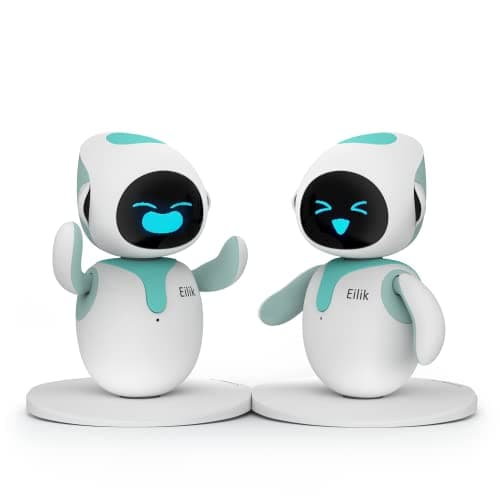
Eilik is a tiny, wildly expressive desktop companion that has built a genuine cult following. It reacts to touch, recognises its surroundings, shows a huge range of emotions on its LED face, and even interacts with a second Eilik if you buy a pair. It is not a pet in the animal sense, but for sheer personality and emotional engagement it is the one most children (and plenty of adults) fall for hardest. We cover it fully in our Eilik robot companion review.
Best for: Ages 8+ (desk-based, so fine for smaller spaces)
Around £300. Check the Eilik price on Amazon UK →As an Amazon Associate, AIToys.co.uk earns from qualifying purchases.
Anki Vector 2.0: Best for Conversational AI
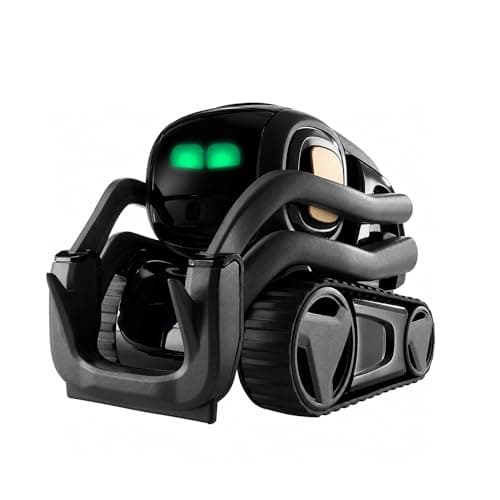
Vector is a small, charming desktop robot with a surprisingly capable brain. The current 2.0 release adds ChatGPT-style conversation on top of the autonomous behaviour Vector was always loved for: he explores his surroundings, recognises faces, answers questions and reacts to being picked up or petted. He is the closest thing on this list to a genuinely conversational pocket robot.
Best for: Ages 8+ (and plenty of adults)
Around £190. Check the Anki Vector 2.0 price on Amazon UK →
Miko 2: Learning companion (not a current buy)
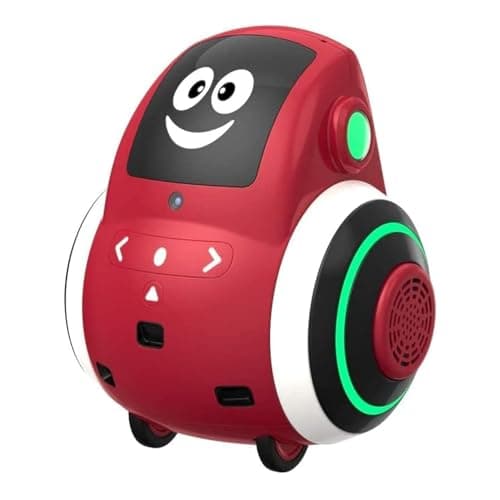
Miko is more companion-tutor than pet (it has a tablet-style face rather than an animal form) and its appeal is companionship and conversation alongside educational content. Manufacturer specs describe age-appropriate conversations, stories, games and a parent app. The 5 August 2026 availability report recorded ASIN B082MBTT88 as currently unavailable on Amazon UK, so this is historical context only. Not a current buy recommendation.
Best for: Ages 5-10 (when stock returns)
Availability note: last recorded as currently unavailable (5 August 2026). No featured CTA.
LOOI: Best Phone-Powered Companion
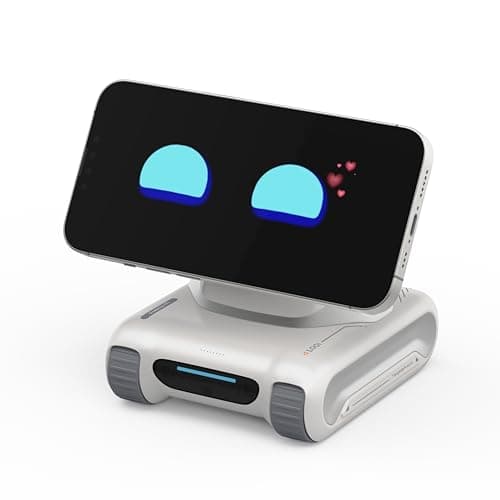
LOOI is a clever twist on the formula: it turns your own smartphone into the robot's face and brain, using the phone's camera and processing for visual understanding, object recognition and expressive AI reactions. Because the heavy lifting happens on the phone, it punches above its price for "intelligence", and it folds away neatly. A great option for families who want modern AI features without a £300 outlay.
Best for: Ages 8+ (needs a compatible smartphone)
Around £200. Check the LOOI price on Amazon UK →
PetsBuzz Anna: Budget AI robot (not a current buy)
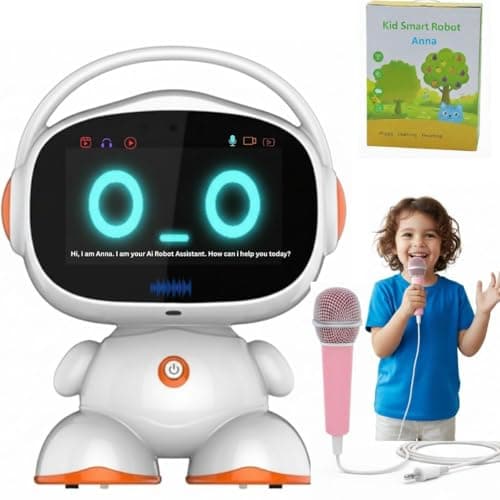
Manufacturer copy positions PetsBuzz "Anna" as a ChatGPT-style talking robot for question-and-answer play and light STEM learning, typically under £100. The 5 August 2026 availability report recorded ASIN B0FWCVN8H9 as currently unavailable on Amazon UK, so this is historical context only. Not a current buy recommendation.
Best for: Ages 5-10 (when stock returns)
Availability note: last recorded as currently unavailable (5 August 2026). No featured CTA.
Chongker Robot Cat: Best Comfort Companion

Not every child wants a chatty, screen-led robot. The Chongker companion cat is a soft, realistic, sensor-driven pet that purrs, responds to stroking and movement, and "breathes": designed for comfort and calm rather than conversation. To be clear, this is an interactive companion rather than an AI in the ChatGPT sense, but for younger children, anxious children, or as a gentle first "pet", it is lovely.
Best for: Ages 3+ (and a popular comfort companion for older relatives too)
Around £99. Check the Chongker Robot Cat price on Amazon UK →
LEXIBOOK Power Puppy: Best Robot Dog on a Budget
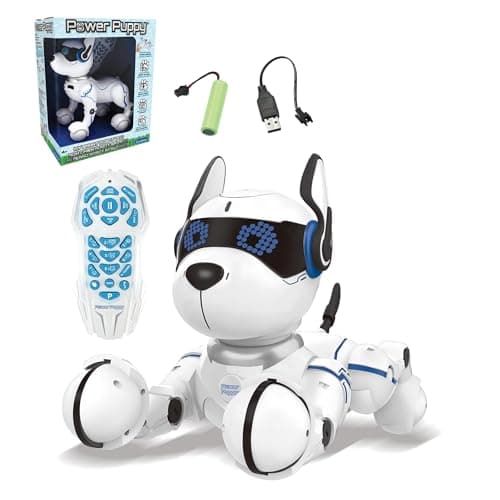
For children set on a robot dog, the Power Puppy is the best-value brand-name option in stock. It walks, sings and dances, responds to voice commands and lets children teach it tricks. It is a "smart interactive" toy rather than a true AI (there is no machine learning involved) but it delivers most of what a younger child actually wants from a robot puppy, at a fraction of the price of the premium companions.
Best for: Ages 6-10
Around £70. Check the LEXIBOOK Power Puppy price on Amazon UK →
Learning Resources PYXEL: Best Coding Pet
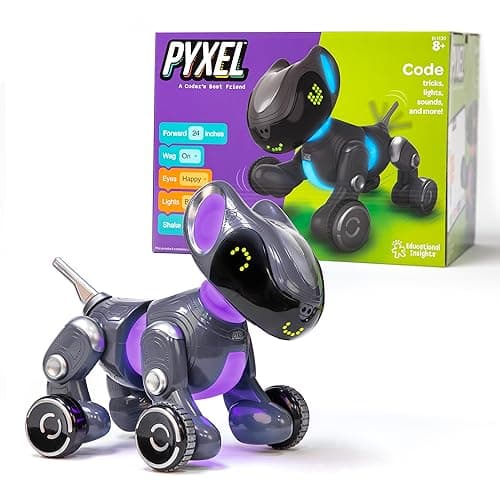
PYXEL bridges the gap between companion and STEM toy. Out of the box it behaves like a playful robot pet, but as your child grows it teaches real programming through Blockly and Python. If you want the emotional appeal of a robot pet and a lasting educational payoff, this is the smartest long-term buy on the list. See our full PYXEL review for the detail.
Best for: Ages 8-12
Around £125. Check the PYXEL price on Amazon UK →
A note on Loona, Vector and the classics
Two of the most talked-about robot pets (KEYi Technology's Loona and the original Anki Vector/Cozmo line) remain superb, but their UK availability is erratic: Loona in particular is often out of stock or sold through third parties at inflated prices. We keep a Loona robot dog review for reference, and you will sometimes find genuine Cozmo and Vector stock at fair prices. Our advice is simple: if you can buy one of these new, at RRP, from a reputable seller, they are excellent, but do not overpay a reseller when the in-stock options above are so capable.
What to Look for When Choosing
Age appropriateness: More autonomous robots need more space and supervision for younger children. Desk-based companions (Eilik, Vector, LOOI) are better for smaller spaces.
Connectivity requirements: Many AI pet robots require WiFi and companion apps for full functionality. Check app compatibility (iOS/Android) and data policies: our smart-toy privacy guide walks through what to look for.
Content subscription: Some robots (Miko especially) have subscription tiers that unlock additional content. Understand the cost before buying.
Battery life: Typical AI robots provide 1-3 hours of active use per charge. For children who want sustained play, check run time carefully.
Durability: These are not drop-proof toys. Build quality varies significantly by brand and price point.
How "AI" Are These, Really?
It is worth being honest, because the word "AI" is used loosely on toy packaging. On this list, the genuinely AI-driven companions (using conversation, recognition or adaptive behaviour) are Eilik, Anki Vector 2.0, Miko 2, LOOI and PetsBuzz Anna. PYXEL is best described as a programmable robotics platform that teaches real coding. The Chongker cat and LEXIBOOK Power Puppy are interactive, sensor-driven toys rather than true AI. Wonderful for play and comfort, but they will not hold a conversation. None of that makes the cheaper options worse choices; it just means you should match the robot to what your child actually wants.
A Note on Honesty With Children
An important parenting consideration with AI pet robots: how honest should we be with children about what the robot is?
Young children may genuinely struggle to understand the distinction between a robot and a living creature. For children under 6-7, this blurring may not be harmful. It's similar to how children form attachments to stuffed animals. But as children grow, honest conversations about what AI is and how it works are valuable, both for critical thinking and for managing expectations if the robot breaks or is retired.
The best AI pet robots can spark excellent conversations about how machines work, what feelings actually are, and why it feels like a robot has emotions even when we know it doesn't. These are important conversations for children growing up in a world where they'll interact with AI constantly throughout their lives.
Related reading
- CrunchLabs: Mark Rober's STEM Subscription Box: UK Guide 2026
- RC Cars with AI Features: Self-Driving Tech for Kids UK 2026
Frequently Asked Questions
What is the best AI pet robot for a child in the UK right now?
For most families, the Eilik is the featured all-rounder for personality and emotional engagement, while the Anki Vector 2.0 is the pick if you want genuine ChatGPT-style conversation. On a tighter budget among featured links, the LEXIBOOK Power Puppy is the remaining robot-dog CTA. PetsBuzz Anna was last recorded as unavailable on 5 August 2026.
Are AI pet robots actually intelligent?
It varies enormously. Conversational models such as Vector 2.0, LOOI and the PetsBuzz Anna use real AI for recognition and dialogue, whereas many cheaper "robot dogs" are remote-control or sensor-driven toys with no learning at all. We have flagged which is which above so you can choose with your eyes open.
What age are robot pets suitable for?
Soft comfort companions like the Chongker cat suit ages 3 and up, playful robot dogs suit roughly 6 to 10, and the more capable AI companions (Eilik, Vector, Miko) are best from about age 8, though plenty of adults enjoy them too. Always check the manufacturer's age rating and supervise younger children with small parts and charging cables.
Do AI pet robots need a subscription or an app?
Some do. Miko offers optional content subscriptions, and several models rely on a companion app for their full feature set. Before buying, check whether the core experience works offline and what ongoing costs apply. Our smart-toy privacy guide explains what data these apps typically collect.
Conclusion
AI pet robots in 2026 range from genuinely impressive companions to overpriced novelties. Among featured links, the Eilik for personality, the Anki Vector 2.0 for conversation, and the PYXEL for a coding payoff are the remaining current CTAs. Miko 2 was last recorded as unavailable on 5 August 2026.
The category isn't right for every child or every family, but for the right child, an AI companion robot can be one of the most consistently engaging and genuinely enriching toys in their collection. If you are still weighing up the wider field, our best AI robot pets round-up and best AI robots for kids go into more depth.
Read next
CrunchLabs UK 2026: Mark Rober Build Box Price and Availability
CrunchLabs UK: Mark Rober toys and Build Box ship from crunchlabs.com. USD prices, shipping and VAT, ages 8-12, plus Amazon UK kits if you need one this week.
Smart Toy Privacy UK 2026: What Parents Need to Know
What data do smart toys collect? A UK parent's guide to toy privacy, GDPR, COPPA, and how to choose safe connected toys for children in 2026.
AI Pet Tech in 2026: The Best Robot Pets and Smart Gadgets for Real Pets (UK)
From AI robot pets like Ropet and Eilik to smart cameras, feeders and trackers for real cats and dogs: the best pet tech you can buy in the UK in 2026.