Honest DJI Neo 2 review for UK buyers. 4K/100fps video, omnidirectional sensing, palm takeoff, gesture control. Is it worth £209? Our full verdict.
📊 Review Score Breakdown
Disclosure: As an Amazon Associate, AIToys.co.uk earns from qualifying purchases. We only recommend products we'd genuinely buy ourselves.
The DJI Neo 2 landed globally in November 2025 and has quickly become the drone most often recommended to beginners, travellers, vloggers and parents who simply want hands-free aerial footage without the steep learning curve. At just 151 grams, it's lighter than a tin of beans — but it now packs omnidirectional obstacle sensing, forward-facing LiDAR, a proper 2-axis mechanical gimbal and 4K video at up to 100fps.
For UK buyers in 2026, the headline numbers are tempting: around £209 for the drone alone, or £289 for the Fly More Combo with three batteries and the digital transceiver. That's serious technology for the price of a mid-range smartphone case.
But is it actually any good in real-world use? After working through the launch reviews from drone specialists, the existing owner feedback on Amazon UK, and the new safety features versus the original Neo, here's our honest take on whether the DJI Neo 2 deserves a spot in your bag — or whether you'd be better off looking at one of the alternatives.
Quick Verdict
The DJI Neo 2 takes everything that made the original Neo a runaway success and addresses its biggest weaknesses — modest video, no obstacle sensing and limited tracking smarts. The new omnidirectional vision system (with forward-facing LiDAR) makes this the safest sub-250g drone DJI has ever built, and the upgraded 2-axis gimbal means footage no longer relies on heavy digital stabilisation. Combine that with palm takeoff, gesture control, voice flying and the new Return-to-Palm landing, and you have a drone that genuinely doesn't require a remote controller for most users.
The 19-minute flight time and absence of a microSD slot are real compromises, and the Fly More Combo is almost mandatory if you plan to use the Neo 2 for anything longer than a quick spin in the park. But for the price, it's hard to think of a more accomplished beginner-friendly drone in 2026.
Our rating: 4.5/5 — recommended for first-time pilots, travellers, vloggers, family creators and existing DJI owners looking for a portable second drone.
What Is the DJI Neo 2?
The DJI Neo 2 is a 151-gram, fully enclosed "follow-me" drone — the successor to the original DJI Neo released in 2024. The original Neo proved that beginners would happily pay for a controller-free drone that takes off from your palm and tracks you automatically. The Neo 2 keeps that core promise but adds the safety and image quality features that were missing first time around.
In DJI's wider 2026 line-up, the Neo 2 sits firmly at the entry point. Above it you have the DJI Mini 4K and our long-recommended DJI Mini 4 Pro, and at the very top the Mini 5 Pro. Below it, DJI's even newer Lito series targets absolute novices. But for that sweet spot of "smart enough to fly itself, light enough to ignore the heavier UK drone rules", the Neo 2 is the obvious pick.
It ships in three configurations on Amazon UK: the Drone Only bundle (ASIN B0FJ1S18HF), the Fly More Combo (B0FJ1F5QZM) with the RC-N3 remote and three batteries, and the Motion Fly More Combo with the DJI RC Motion 3 and Goggles N3 for an FPV experience.
Key Specs at a Glance
| Specification | DJI Neo 2 |
| Weight | 151 g (160 g with Digital Transceiver) |
| Camera sensor | 12MP, 1/2-inch CMOS, f/2.2 |
| Max video | 4K @ 100fps slow motion / 4K @ 60fps standard |
| Vertical video | 2.7K @ 60fps |
| Gimbal | 2-axis mechanical (tilt, roll) |
| Tracking speed | Up to 12 m/s (≈27 mph) |
| Flight time | Up to 19 minutes |
| Wind resistance | Level 5 (10.7 m/s) |
| Internal storage | 49 GB |
| Transmission | 6 km (O4, with Digital Transceiver) / 500 m (Wi-Fi) |
| Obstacle sensing | Omnidirectional vision + forward-facing LiDAR + downward IR |
| UK reg status | Sub-250g, A1 Open Category |
Build Quality and Design — Small, Safe and Surprisingly Tough
Pick up the Neo 2 for the first time and the build quality is reassuring. The fully enclosed propeller cage that defined the original Neo returns — and it's a brilliant feature for beginners, families and indoor flying. If you clip a doorframe or your child's head (it'll happen), the props are protected and nobody gets hurt.
What's new on the outside: a small matrix LED display on the front that shows the current mode, a forward-facing LiDAR sensor, fish-eye vision sensors at the front, back, top and bottom for omnidirectional collision sensing, and twin antennae at the rear for the upgraded O4 transmission system.
The body sits comfortably in a child's palm and is genuinely pocketable. At 151g it slips under the 250g UK threshold for the A1 subcategory of the Open Category — meaning you can fly over uninvolved people (though never crowds), and as of mid-2026 you do need both a UK Operator ID and a Flyer ID before taking off.
One small ergonomic gripe: the batteries can be slightly fiddly to clip in and out, particularly with cold hands. It's a minor thing, but worth knowing if you'll be swapping batteries frequently in a chilly British autumn.
Camera Performance — A Genuinely Big Step Up
This is where the Neo 2 leaves its predecessor in the dust. The original Neo capped out at 4K/30fps with only a single-axis gimbal and digital stabilisation. The Neo 2 jumps to 4K at 60fps for standard footage and 4K at 100fps for cinematic slow motion (when using a remote or motion controller), all stabilised by a proper 2-axis mechanical gimbal.
In real-world testing reported across the launch reviews — TechRadar, Digital Camera World, Tom's Guide and Heliguy all spent meaningful time with the drone — footage is genuinely sharp, with controlled noise in moderate light and clean colour reproduction. DJI's portrait optimisation tech does some clever work on skin tones in selfie shots, brightening faces without going overboard on the smoothing.
There's also a new SelfieShot mode that automatically composes waist-up, full-body or wide shots without you having to fiddle with framing. It's gimmicky on paper but genuinely useful in practice — particularly for solo travellers and content creators.
Vertical 2.7K shooting is a notable addition for anyone publishing to TikTok, Instagram Reels or YouTube Shorts. The original Neo only managed vertical 1080p, which felt distinctly second-class.
The one ongoing limitation is the 1/2-inch sensor. In bright daylight it does an excellent job, but as light fades it can't match the larger sensors in the DJI Mini 4 Pro or Mini 5 Pro. For the price, however, this is comfortably the best image quality we've seen on a sub-£250 drone.
Omnidirectional Sensing — The Safety Upgrade That Matters
If you only upgrade from the original Neo for one reason, this is it. The Neo 2 introduces full omnidirectional obstacle sensing to the entry-level DJI range, combining monocular vision sensors at the front, back, top and sides, a forward-facing LiDAR module, and a downward infrared sensor.
In practice, this means the drone will spot a branch, a fence, a person or a wall and adjust course — even when it's tracking you at speed. Eight-direction tracking (forward, backward, left, right and four diagonals) replaces the more limited tracking of the original Neo, and the system can switch to rear tracking automatically if you turn away.
For beginners, this changes the calculation entirely. Crashes are the number-one reason new pilots give up on drones (or worse, lose interest in flying after an expensive write-off). The Neo 2's safety net dramatically reduces the chances of an embarrassing first-flight disaster. Combined with the full-coverage propeller guards, this is the most forgiving consumer drone DJI has ever made.
A small caveat: in poor light, particularly winter dusk, thin branches and wires can still slip past the optical sensors. The LiDAR helps, but it's not infallible. Common sense still applies.
Multiple Control Options — Use Whatever You Like
DJI clearly wanted the Neo 2 to suit every kind of pilot, and the result is a genuinely versatile control system. You can choose from:
Palm takeoff and Return-to-Palm. Cycle through modes using the buttons on top, place the drone flat on your palm, press launch and it'll lift off. When you're finished, it locates your palm and lands neatly on it. This is the headline experience and it really is as easy as it sounds — children as young as nine have been demonstrated using it on their first attempt.
Gesture control. Raise your palm to direct the drone up, swipe sideways to glide, spread both hands to push the drone further away for a wider shot. There's a brief tutorial in the DJI Fly app, but most people pick the basics up in minutes.
Voice control. When paired with your phone or a set of Bluetooth headphones, you can shout flight commands while cycling or running. The drone's microphone can't hear over its own props, hence the phone requirement — but for sports tracking it's a clever workaround.
Mobile app. Connect over Wi-Fi for traditional virtual joystick control through the DJI Fly app.
Traditional remote. Pair with the DJI RC-N3 (included in the Fly More Combo) for stick-based control and 6 km range via the O4 transmission system, which requires the Neo 2 Digital Transceiver to be installed.
Motion controller and goggles. Pair with the DJI RC Motion 3 and Goggles N3 (Motion Fly More Combo) for an immersive FPV experience.
That last option deserves a special mention. FPV flying has historically been an expensive, niche pursuit. Bundling Neo 2 with the Motion 3 and Goggles N3 brings entry-level FPV within reach of a much wider audience.
ActiveTrack and SelfieShot — The "Self-Flying Drone" Promise
The Neo 2's tracking is, by some distance, the best we've seen at this price. ActiveTrack now keeps up at 12 m/s (around 27 mph), making it suitable for tracking running, cycling and even mountain biking. The drone uses its omnidirectional sensors to track from eight directions and can intelligently switch to rear-tracking mode if you turn around or duck under branches.
A new dedicated cycling mode anticipates the rider's movements rather than reacting to them, producing noticeably smoother follow shots. Several launch reviewers tested this with road and mountain bikes and came away impressed.
SelfieShot is the other clever new mode. Tap once and the drone automatically captures a waist-up shot, full-body shot, and wide group shot — perfect for picnics, family days out, birthdays or travel content. The framing is smarter than you'd expect.
There are limits. Determined kids can still dodge the drone by ducking under it (we know — testers tried). And in heavy tree cover the tracking can lose lock briefly. But for everyday use, this is the kind of intelligent automation that makes a drone genuinely fun rather than fiddly.
UK Drone Law — Why 151g Matters
UK drone regulations changed significantly in 2026, and the Neo 2's weight category is one of the most important reasons to choose it over heavier alternatives.
At 151g (or 160g with the Digital Transceiver installed), the Neo 2 sits well under the 250g threshold that defines the lightest open-category drones. This means you can fly in the A1 subcategory of the Open Category — including flights over uninvolved people, though never directly over crowds and never beyond visual line of sight.
From 1 January 2026, the rules also require both an Operator ID (registered to the person responsible) and a Flyer ID (a free online theory test) for the Neo 2. This is a change from 2025, when the Flyer ID was only recommended for sub-250g drones. The Civil Aviation Authority website has both registrations available and the Flyer ID test takes around 20 minutes.
You still need to follow the standard rules: no flying above 120m, no flying within Flight Restriction Zones around airports or aerodromes without permission, and always keep your drone in line of sight. The DJI Fly app automatically warns you of restricted zones — a small but important safety feature.
Battery Life and Storage — Two Real Compromises
We have to be honest about two limitations. The first is battery life. DJI quotes 19 minutes per flight, which is technically a one-minute improvement over the original Neo, but in real-world use (particularly in cooler weather and with active tracking running) you should plan on 12-15 minutes of usable footage per charge. This is why the Fly More Combo, which includes three batteries and the two-way charging hub, is almost essential for anyone planning longer outings.
The second is storage. The Neo 2 has 49GB of internal storage — generous by entry-level drone standards — but no microSD card slot. That's enough for around 105 minutes of 4K/60fps video before you need to offload via the 80MB/s wireless QuickTransfer to your phone or via USB-C to a laptop. For most people this is fine, but anyone planning a multi-day trip without a laptop should think carefully about how they'll manage storage in the field.
DJI Neo 2 vs DJI Neo — Should You Upgrade?
If you already own the original DJI Neo, the upgrade case depends on what bothered you about it. The Neo 2 is meaningfully better in five areas:
- Video resolution: 4K/100fps vs 4K/30fps
- Gimbal: 2-axis mechanical vs 1-axis
- Obstacle sensing: full omnidirectional vs none
- Tracking speed: 12 m/s vs 8 m/s
- Internal storage: 49 GB vs 22 GB
If the original Neo's footage looked good enough for your needs and you've never had a crash, save your money. If you wished the original was safer (particularly with kids), smoother (the new gimbal is a real upgrade), or sharper (4K/100fps is broadcast-grade), the Neo 2 justifies the upgrade.
DJI Neo 2 vs DJI Mini 4 Pro — Different Drones, Different Jobs
Several readers will ask whether to save up for the Mini 4 Pro instead. The short answer: they're aimed at different pilots.
The Neo 2 is a self-flying camera drone — built for selfie content, tracking, family use and "look, no controller" simplicity. The DJI Mini 4 Pro is a proper photography drone with a 1/1.3-inch sensor, longer battery life, manual control and significantly more demanding rules of the road.
If you're buying for travel vlogging, family days out and casual aerial shots, the Neo 2 wins on simplicity and price. If you want to shoot 4K HDR for a YouTube channel and learn proper stick control, the Mini 4 Pro remains our top recommendation — but at roughly £580 it's nearly three times the cost.
If you're not sure where you'll land, also have a look at our DJI Mini 4K review for a budget alternative or our DJI Tello EDU review for a coding-friendly option.
Who Is the DJI Neo 2 For?
Buy this drone if you are:
- A first-time pilot who wants a safe, forgiving introduction to drones
- A traveller who values portability and sub-250g regulatory simplicity
- A vlogger or content creator who needs hands-free 4K and vertical video
- A parent looking for a drone that's safe to fly around children (full propeller cage and obstacle sensing)
- An existing DJI owner wanting a small, capable second drone for casual use
- A cyclist or runner who wants smooth tracking footage of activities
Look elsewhere if you are:
- A professional photographer needing low-light performance — the larger-sensor Mini 4 Pro or Mini 5 Pro will serve you better
- A long-range pilot — the 6 km O4 range is good but Mavic-class drones go further
- Someone who hates the idea of internal-only storage
- Determined to avoid any drone registration paperwork (you'll need both an Operator and Flyer ID for the Neo 2 from 2026)
Value for Money — Where Does It Sit?
At around £209 for the drone only, £289 for the Fly More Combo and £349 for the Motion Fly More Combo, the Neo 2 is exceptional value for what's inside. You're getting 4K/100fps video, omnidirectional obstacle sensing, a forward-facing LiDAR, and an AI-driven tracking system that genuinely works — for less than the cost of a decent mid-range smartphone.
We'd strongly recommend at least the Fly More Combo for most buyers. Three batteries means closer to 57 minutes of total flight time, the two-way charging hub means you can charge three batteries at once, and the bundled Digital Transceiver enables the full 6 km O4 transmission range (vs 500m on Wi-Fi alone). The price jump from drone-only to Fly More Combo is one of the best value steps in DJI's entire range.
(Prices correct as of May 2026 — always check Amazon for current pricing, which can fluctuate with offers and seasonal sales.)
Final Verdict — A Brilliant Beginner's AI Drone
The DJI Neo 2 is the most accomplished sub-250g selfie drone we've seen. The combination of palm takeoff, gesture and voice control, Return-to-Palm landing, omnidirectional obstacle sensing, 4K/100fps slow motion and a proper 2-axis mechanical gimbal is remarkable at this price point. It's the drone we'd hand to a nervous first-time pilot, a teenage content creator, a travel-loving relative or anyone in our extended family who wants effortless aerial footage without the steep DJI learning curve.
It isn't perfect. The 19-minute battery life is modest, the lack of a microSD slot will frustrate some, and from 2026 you'll need to register for both an Operator ID and a Flyer ID before your first flight. But none of these issues outweigh the sheer joy of taking off from your palm, watching the Neo 2 follow you down a country lane in 4K, and having it land neatly back in your hand a few minutes later.
For UK buyers in 2026, this is the easiest drone recommendation we've made all year. If you want safer, smarter aerial footage with the absolute minimum of fuss, the DJI Neo 2 deserves to be your first port of call. Don't forget the DJI Mini 4 Pro review if you want a longer-range alternative, or our DJI Mini 3 review for an older but capable mid-range option.
Frequently Asked Questions
Is the DJI Neo 2 worth it over the original DJI Neo? For most new buyers, yes. The omnidirectional obstacle sensing alone makes the Neo 2 dramatically safer, and the upgraded gimbal and 4K/100fps video are noticeable improvements. The original Neo is still a fine drone for very casual use at a lower price.
Do I need a Flyer ID to fly the DJI Neo 2 in the UK? From 1 January 2026, yes. Both an Operator ID (the person responsible) and a Flyer ID (a free online theory test) are required for the Neo 2 in the UK Open Category. The test takes around 20 minutes and is free via the Civil Aviation Authority.
Can I fly the DJI Neo 2 indoors? Yes — the full-coverage propeller guards and downward IR sensors make it one of the safer drones for indoor use, particularly in larger rooms. The omnidirectional sensing helps avoid walls and furniture.
How long does the battery last? DJI claims 19 minutes per battery, but in real-world use with active tracking expect 12-15 minutes of usable footage per charge. The Fly More Combo includes three batteries and a two-way charging hub.
Does the DJI Neo 2 work with my phone alone? Yes. You can fly it via the DJI Fly app over Wi-Fi (500m range) with no remote controller required, or use palm takeoff, gesture and voice control entirely controller-free.
Is it safe around children? The full-coverage propeller cage and omnidirectional obstacle sensing make this one of the most child-friendly consumer drones available. Adult supervision is still recommended.
Related Articles
- DJI Mini 4 Pro Review — the next step up for serious photographers
- DJI Mini 4K Review — a stick-controlled alternative at a similar price
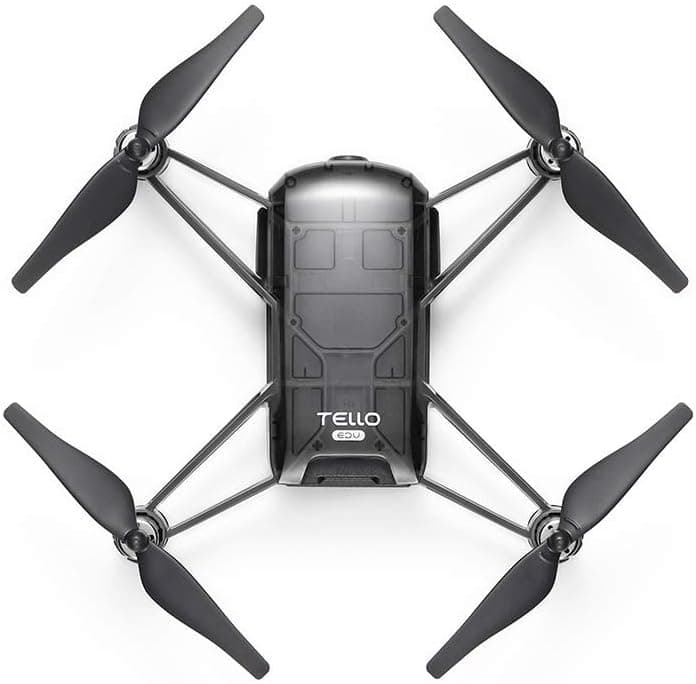
- DJI Tello EDU Review — a coding-friendly drone for kids
- DJI Mini 3 Review — older but still capable Mini-series option
- DJI Osmo Pocket 3 Review — for handheld creators rather than aerial