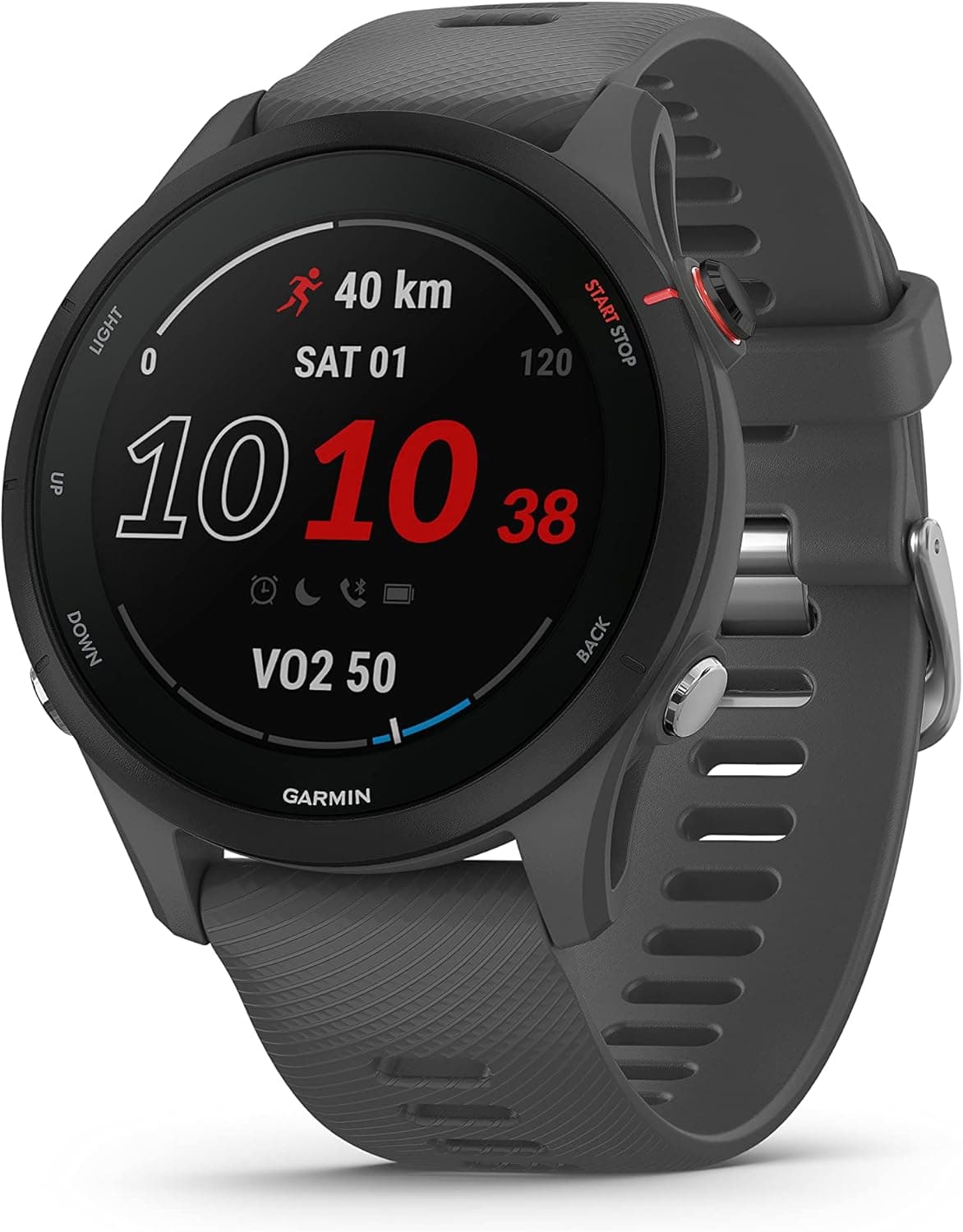
Garmin Forerunner 55 review UK: built-in GPS, 2-week battery, training suggestions. The best affordable GPS running watch for UK beginners and intermediates?
📊 Review Score Breakdown
Disclosure: This article contains affiliate links. If you buy through our links, we may earn a small commission at no extra cost to you.
Garmin Forerunner 55 Review: AI Training Intelligence for Everyday Runners
If you're serious about running but don't want to spend £400+ on a Garmin Fenix or Forerunner 265, the Garmin Forerunner 55 hits a sweet spot that few rivals can match. For around £150–£200, you get accurate built-in GPS, AI-powered training suggestions, Garmin's acclaimed health tracking suite, and an extraordinary two-week battery life. No daily charging anxiety, no compromises on GPS accuracy.
We tested the Forerunner 55 over three months of regular running — 5K parkruns, longer training runs up to half-marathon distance, and everyday wear — comparing it against the Fitbit Charge 6 and a higher-end Garmin Forerunner 265.
Quick Verdict
| Rating | ⭐⭐⭐⭐½ 4.5/5 |
| Best for | Beginner to intermediate runners |
| Battery | Up to 2 weeks smartwatch / 20 hours GPS |
| Price range | ~£150–£200 |
| Water resistance | 5ATM (50m) |
| Verdict | The best value GPS running watch on the market — Garmin's training AI is exceptional at any price. |
Key Specifications
- MIP display (always visible in sunlight)
- Built-in GPS (GNSS)
- 24/7 heart rate monitoring
- VO2 max estimate and training status
- Daily Suggested Workouts (AI-generated)
- Body Battery energy monitoring
- Stress tracking
- Sleep monitoring
- 20 sport/activity modes
- 2-week battery in smartwatch mode; 20 hours GPS
- 5ATM water resistance
- Garmin Connect app (iOS and Android)
- Garmin Pay (some regions)
GPS Accuracy: Where Garmin Earns Its Reputation
Garmin's GPS chipset and algorithms are the gold standard in consumer running watches, and the Forerunner 55 is no exception. Distance and pace readings are consistently accurate across varied terrain — city streets, parks, woodland trails — with fast satellite acquisition even under tree cover.
During a 10K test run on a known route, the Forerunner 55 measured within 15 metres of the mapped distance. Pace readings were smooth and responsive rather than spiking on tight corners. For runners who care about accurate training data, this matters enormously.
Daily Suggested Workouts: The AI Coaching Feature
The standout feature at this price point is Garmin's Daily Suggested Workouts. The watch analyses your recent training load, recovery metrics, and current fitness level to recommend an appropriate workout for today — "Easy 30-minute run at Zone 2", "Rest day recommended", "Tempo intervals: 4×5 minutes at threshold".
These suggestions aren't generic; they adapt based on your Garmin Connect training history and how your body is responding to load. For runners without a coach, this AI guidance is genuinely useful — it helps build fitness progressively while managing injury risk.
Body Battery and Training Load
Body Battery is Garmin's energy management metric — a 0–100 score that combines heart rate variability, sleep quality, stress, and activity to estimate how recovered you are. High Body Battery = go hard today. Low Body Battery = take it easy.
In practice, Body Battery correlates well with subjective feelings of fatigue and readiness. It's particularly useful for runners who train most days — knowing when to push and when to recover is a skill the data helps develop.
Battery Life: A Genuine Advantage
Two weeks in smartwatch mode is exceptional. Fitbit Charge 6 offers 7 days; Samsung's Galaxy Watch manages 3-4 days. Not having to charge every few days removes friction that makes people stop wearing their fitness tracker altogether.
GPS mode drains faster (around 20 hours), but for daily runs of under 3 hours, you'll charge weekly at most. For marathon training blocks with long runs over 3+ hours, the Forerunner 265 or 955 would be more appropriate — but for most recreational runners, the 55 has more than enough.
Display: Functional Over Flashy
The MIP (Memory-in-Pixel) display isn't the vibrant AMOLED screen you'll find on the Fitbit Charge 6 or Samsung Galaxy Watch. It's monochrome-ish, relatively small, and won't win beauty contests. What it does offer is excellent sunlight visibility — no squinting at a glare-washed screen mid-run — and it draws minimal power (contributing to the exceptional battery life).
If you prioritise aesthetics, the Forerunner 55 looks like a functional sports watch rather than a fashion accessory. For many runners, that's entirely appropriate.
Garmin Connect: The Best Fitness App Ecosystem
Garmin's Connect app is one of the most comprehensive fitness platforms available. Detailed post-run analysis, training load charts, sleep data, a route planner, and access to Connect IQ for additional watch faces and apps. The community features let you compare runs, join challenges, and track segment records — similar to Strava but baked into the native platform.
Strava, Komoot, and Training Peaks integrations sync seamlessly if you prefer those platforms.
Who Should Buy the Garmin Forerunner 55?
Perfect for:
- Beginner and intermediate runners wanting accurate GPS data
- Anyone who hates charging their watch frequently
- UK parkrun regulars who want to track progress
- Couch-to-5K graduates ready for proper running metrics
Consider alternatives if:
- You want music storage or contactless payments (Forerunner 265 or Venu 3)
- You're an Apple Watch ecosystem user (Apple Watch Ultra 2)
- You want a fashion-forward AMOLED display
Final Verdict
The Garmin Forerunner 55 is the benchmark entry-level GPS running watch. Accurate GPS, AI training suggestions, outstanding battery life, and access to Garmin's deep ecosystem — it gives serious runners everything they need without the premium price tag. The basic display is its only real weakness.
Rating: 4.5/5 — The GPS running watch most UK runners should buy first.